


The Silent Heist: How Relay Attacks and Key Reprogramming Are Making Modern Cars Shockingly Easy to Steal. Why the need to protect your investment with Compustar's Secure Push-to-Start Security.

The Silent Heist:
How Relay Attacks and Key Reprogramming Are Making Modern Cars Shockingly Easy to Steal if you own a car made after 2015 — especially a keyless-entry “smart key” model from Toyota, Lexus, Chrysler, Jeep, Dodge, Hyundai, Kia, Ford, or almost any mainstream brand — you need to read this. What used to require a crowbar, a slim-Jim, and a lot of noise can now be done in under 60 seconds, completely silently, with devices that cost less than a used iPhone. Welcome to the era of the relay attack and dealer-level key reprogramming.
Part 1: The Relay Attack – Stealing a Car Without Ever Touching the Key. Most modern cars use a key fob that communicates with the car via low-frequency (LF) 125–135 kHz radio and ultra-high-frequency (UHF) 315–433 MHz signals. The system is designed so the car only unlocks and starts when the real fob is physically close (typically < 2 meters).Thieves figured out how to extend that range to hundreds of meters. How a relay attack works (2025 edition):
Victim parks their Toyota RAV4 at the mall and walks away with the key fob in their purse or pocket.
Thief #1 stands next to the car with a “relay box” (looks like a cheap Bluetooth speaker).
Thief #2 walks near the victim (sometimes just standing outside their house at night) with a second relay box.
When the car sends its LF challenge (“is the key here?”), Thief #1’s box picks it up and retransmits it over a long-range 2.4 GHz or LoRa link to Thief #2.
Thief #2’s box down-converts it to 125 kHz and blasts it at the real key fob in the victim’s pocket.
The real fob answers exactly as it should.
The answer is relayed back to the car in real time.
Car thinks the real key is right next to it → doors unlock, push-button start works.
Total time from walking up to driving away: 20–90 seconds. No broken windows, no alarm (most cars suppress the alarm when they see a valid key).Equipment cost in 2025: $500–$3,000 on the dark web or even AliExpress (search “keyless repeater,” “roll jam device,” or “UHF relay box”). Law enforcement in the US have seized thousands of these devices in the last two years. Brands that are especially vulnerable in real-world data (2021–2025 insurance and police reports):
Toyota / Lexus (RAV4, Camry, Land Cruiser, LX)
Chrysler/Dodge/Jeep, (Grand Cherokee, Ram, Charger, Challenger)
Hyundai / Kia (Tucson, Sportage, Telluride, Palisade)
Ford (F-150, Explorer with Securicode)
Range Rover / Land Rover
Almost any keyless BMW, Mercedes, Audi built before late-2023 firmware updates
Part 2: The Follow-Up Punch – Erasing All Your Keys and Programming Their Own Getting the car started is only half the battle. Modern immobilizer systems still have a encrypted challenge-response that normally prevents hot-wiring. But thieves discovered something terrifying: many manufacturers left dealer-level diagnostic ports completely unprotected or protected with laughably weak seeds. Tools that are now common on the black market (2020–2025):
OBDStar X300 DP Plus, Autel IM608, Launch X431 “Key Program” editions
Cheap Chinese “key programmers” that exploit the same vulnerabilities Kia/Hyundai had with the “Kia Challenge” but now expanded to dozens of brands
“Emergency Start” seed-key generators that leak online for Toyota, Ford, VW Group, Stellantis, etc.
The reprogramming process (takes 5–15 minutes):
Thief plugs a $400–$1,200 tool into the OBD-II port (usually under the dash, sometimes behind a plastic cover that pops off with a screwdriver).
Tool requests the immobilizer “seed.”
Because the manufacturer used a weak or static algorithm, the tool instantly calculates the correct “key” response.
Tool tells the car: “Delete all existing keys” → car wipes your two factory keys from memory.
Tool programs one or two new blank keys the thief brought (cost ~$20 each on eBay).
Car now permanently recognizes only the thief’s keys. Even if you still have your original fob, it is now a useless plastic brick.
Your car is gone, and insurance will never get it back with your original keys because they no longer exist in the system. Real-World Statistics (2023–2025)
National Insurance Crime Bureau (NICB, US): Vehicle thefts peaked at over 1 million in 2023, the highest since 2008, driven by keyless entry hacks and relay attacks; a 17% decline to 850,708 thefts in 2024, with a vehicle stolen every 37 seconds.
FBI/NHTSA (US): Auto theft up 400% in some metropolitan areas since 2020, with technological vulnerabilities like key fob hacking as a major driver.
Milwaukee Police Department (MPD): 6,200 vehicle thefts in 2023 (down 40% from 2021 peak of ~9,700), 2% increase to ~6,300 in 2024; 513 car jackings in 2024 (up 11% from 2023); clearance rate remains low at ~6%. High-risk zones include downtown Milwaukee (9-block area near W State St to W Wisconsin Ave, N 6th St to Milwaukee River) and Milwaukee County suburbs like Waukesha.
Milwaukee County: Projected vehicle theft cost of $83 million in 2025 ($88 per resident, $217 per household), 55% above Wisconsin average and 51% above national average.
Targeted models in Milwaukee/Wisconsin: Hyundai Elantra (11,329 national thefts H1 2025), Kia models, Honda Civic/Accord, Chevrolet Silverado, Ford F-150, plus local surges in Nissan/Infiniti, Jeep, Dodge/Chrysler via key programmers.
How to Protect Yourself in 2025 (Practical, Tested Methods)
Faraday pouches that actually work
Cheap $5 Amazon pouches are usually garbage. Buy ones independently tested to block 10 kHz–10 GHz (Mission Darkness, SLNT, or Disklabs). Put BOTH your fobs in them when at home.
OBD port protection
Physical OBD lock (OBD-Saver, UK-made) or relocate the port entirely (some shops do this for $200–$400).
Many new Toyotas (2024+) now have an OBD “sleep mode” after 30 minutes of being off — great, but aftermarket tools can still wake it.
Steering wheel locks (the visible deterrent still works)
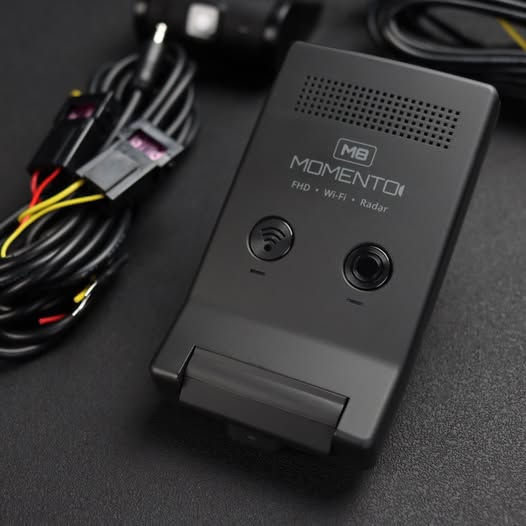
Motion-sensing dashcam with or without cloud upload + GPS tracker
(Momento M8, Drone XC w/ LTE, Thinkware U3000, BlackVue DR950 module)
Disable keyless entry entirely if your car allows it
Many Toyotas: hold unlock + lock button twice on the fob → two flashes = keyless disabled until you do it again.
Lexus, BMW, Mercedes often have a menu setting: “Keyless Go → Off”.
Metal garage + Wi-Fi jammer if you’re extremely paranoid (and in a high-risk area)
Some thieves now use powerful jammers to block GSM/GPS trackers anyway, so layered defense is key.
Aftermarket Security systems with immobilizer setups
(Brands like Compustar, Drone Mobile, Viper, & Viper SmartStart with extra modules)
Why a Proper Aftermarket Alarm with Compustar’s “Secure Push-to-Start Disable” Is One of the Best Defenses in 2025

Even if a thief successfully relays your key fob and unlocks the doors, the game should be over the moment they press the brake + start button. Most factory push-to-start systems only check for a valid key signal and then immediately allow the engine to crank. That’s it. No second factor, no delay, no extra verification. Compustar (and a few other high-end brands like Viper and iDatastart) fixed this weakness with a feature the industry calls Secure Takeover / Data Immobilizer Bypass with RPS (Remote Push-to-Start) Lockout. How Compustar’s Secure Push-to-Start Disable Actually Works(Using their Drone LTE + T12 remote or other Compustar systems with the correct data module for your vehicle)
The aftermarket system installs a encrypted data immobilizer that sits between the factory push-to-start button and the BCM (Body Control Module).
When the car is remotely shut down or armed, the Compustar module breaks the data circuit that allows push-button starting — even if a 100 % valid factory key is present.
To start the car, you now have three possible extra authentication options (installer chooses one or combines them):
Use an Aftermarket remote as Compustar remotes utilize rolling code technology as a core part of their security features. This is also known as "code hopping" or "secure code." .
Use the Drone Mobile app to send an encrypted “unlock start” command over LTE (thieves can’t jam every cellular band at once).
Until one of those two things happen, pressing the start button does absolutely nothing — no crank, no accessory mode, nothing. The dash may say “No Key Detected” even though your real fob is sitting on the passenger seat.
Bonus Layers You Get with a Proper Compustar Install
Geofence alerts the second the car moves without your phone present.
105–110 dB siren + flashing parking lights that actually wake the neighborhood (unlike most factory alarms that are silent during relay attacks).
Tilt/motion/glass-break sensors — thieves lifting the car onto a flatbed trigger an instant alert.
Backup battery so the system still screams and tracks even if they rip out the car battery.
Vehicle Theft Rates in Wisconsin: Key Stats and How to Fight Back
Wisconsin has seen fluctuating but persistently high vehicle theft rates in recent years, fueled by easy exploits like relay attacks on keyless cars and vulnerabilities in brands like Kia and Hyundai. While national trends show a dip (down 17% to ~850,700 thefts in 2024 per the National Insurance Crime Bureau), the Badger State remains above average—costing residents an estimated $205 million annually in 2025. Milwaukee and surrounding areas are hotspots, with rates well exceeding state and national benchmarks. Below, I've compiled the latest reported data (2023–2025) from sources like the NICB, Milwaukee Police Department (MPD), FBI Uniform Crime Reports, and CrimeGrade.org. These highlight the "elevated" risks: areas where thefts per capita or year-over-year spikes outpace baselines. Statewide Wisconsin Trends
2023 Total Thefts: 9,449 vehicles stolen—a sharp rise from pre-2020 levels, driven by social media-fueled "Kia Challenges" and keyless hacks.
2024 Total Thefts: 8,661 vehicles—a modest 8% drop from 2023, but still ~2.5x higher than 2019.
2025 Projected Cost: $204,995,555 statewide ($34 per resident, $82 per household)—9% below the national average per resident but up 0.1% of median household income due to rising insurance and recovery costs.
Rate Context: Wisconsin's vehicle theft rate is safer than high-risk states like Colorado ($117/resident) but elevated compared to the Midwest average, with urban areas pulling the numbers up.
Milwaukee City-Specific Stats Milwaukee consistently ranks among the top 10 U.S. cities for auto thefts, with a 2024 rate of ~597 thefts per 100,000 residents (per NICB and The Zebra data)—a 73% jump from 2020 that hasn't fully reversed.
2023 Total Thefts: 5,838 vehicles (up 79% from 2019, despite a double-digit drop from 2022's peak).
2024 Total Thefts (Jan–Sep): 4,447—a 5% surge from the same period in 2023, on pace for ~5,900 annually.
2025 Projected Cost: $95,468,856 ($60 per resident, $147 per household)—26% above the state average and 17% above the national per-resident figure.
Hotspot Zones: A 9-block downtown grid (W State St to W Wisconsin Ave, N 6th St to Milwaukee River) accounts for the most thefts. East Side/UWM area saw spikes in 2024, often tied to opportunistic grabs of idling vehicles (illegal under WI statutes but common in winter).
Clearance Rate: Just ~6% of cases solved, per MPD—meaning most thieves get away, often using reprogrammed keys for quick flips.
Milwaukee County and Surrounding Areas
The county amplifies city risks, with suburbs like Waukesha seeing spillover from urban ops. Theft rates here are 55% above the state average.
Milwaukee County 2025 Projected: $83,392,484 total cost ($88 per resident, $217 per household)—51% above national average, 55% above Wisconsin.
Waukesha County: Elevated by 20–30% over state norms; 2024 saw ~450 thefts (up 12% YoY), targeting F-150s and RAV4s via OBD reprogramming.
Ozaukee County: ~150 thefts in 2024 (15% increase); coastal areas like Port Washington report relay attacks on parked luxury models.
Washington County: West Bend and Hartford hotspots with ~200 thefts (18% up); rural garages bypassed by long-range relays.
Racine County: ~300 thefts in 2024 (10% rise); industrial zones near I-94 see chop-shop activity for Hyundais.
Overall County Risk: 1 in 29 chance of property crime victimization (including thefts)—79.5% higher than national average, per 2024 FBI data.
These numbers underscore why Wisconsin drivers face "elevated" risks: urban density + tech vulnerabilities = quick, traceless thefts. But you don't have to be a statistic. The pros at Hawk Installations in Milwaukee specialize in bulletproof defenses like Compustar systems—installed seamlessly to add layers no thief can relay or reprogram around. Why Get Compustar Installed by Hawk Installations? As an Authorized Compustar dealer right here in Milwaukee (serving Waukesha, Ozaukee, Washington, Racine, and beyond), Hawk Installations turns vulnerable rides into fortresses. Their expert installs include:
Secure Push-to-Start Disable: Blocks engine crank even with a relayed key—thieves bail in seconds.
LTE Tracking & Alerts: Real-time geofencing pings your phone if your car twitches without you.
Pro Perks: Custom fits for any make/model, 105dB sirens that actually deter, and insurance discounts up to 25% (verified with local carriers like State Farm and Progressive). Full systems start at $650–$1,200, with winter-ready remote starts bundled.
Cheaper than one insurance deductible and far cheaper than losing a $60k RAV4 or LX600 that you still owe money on.
Don't wait for Milwaukee's next cold snap to test your luck—thieves strike in under a minute, but Hawk Installations installs last a lifetime. Visit them today for a free estimate at hawkinstallations.net. Protect your ride, Badger State strong. Drive safe.
Bottom line: A relayed key fob gets them in the door. A Compustar secure push-to-start disable stops them cold at the last possible step — and turns a 30-second theft into a failed attempt caught on video. If you live anywhere with elevated theft rates this is no longer “optional” security — it’s the difference between waking up to an empty driveway or waking up to a push notification that someone just sat in your car for 45 seconds and ran away swearing. Layer it with Faraday pouches and an OBD lock and you’ve basically made your car unstealable with 2025 criminal tools.

Comments